
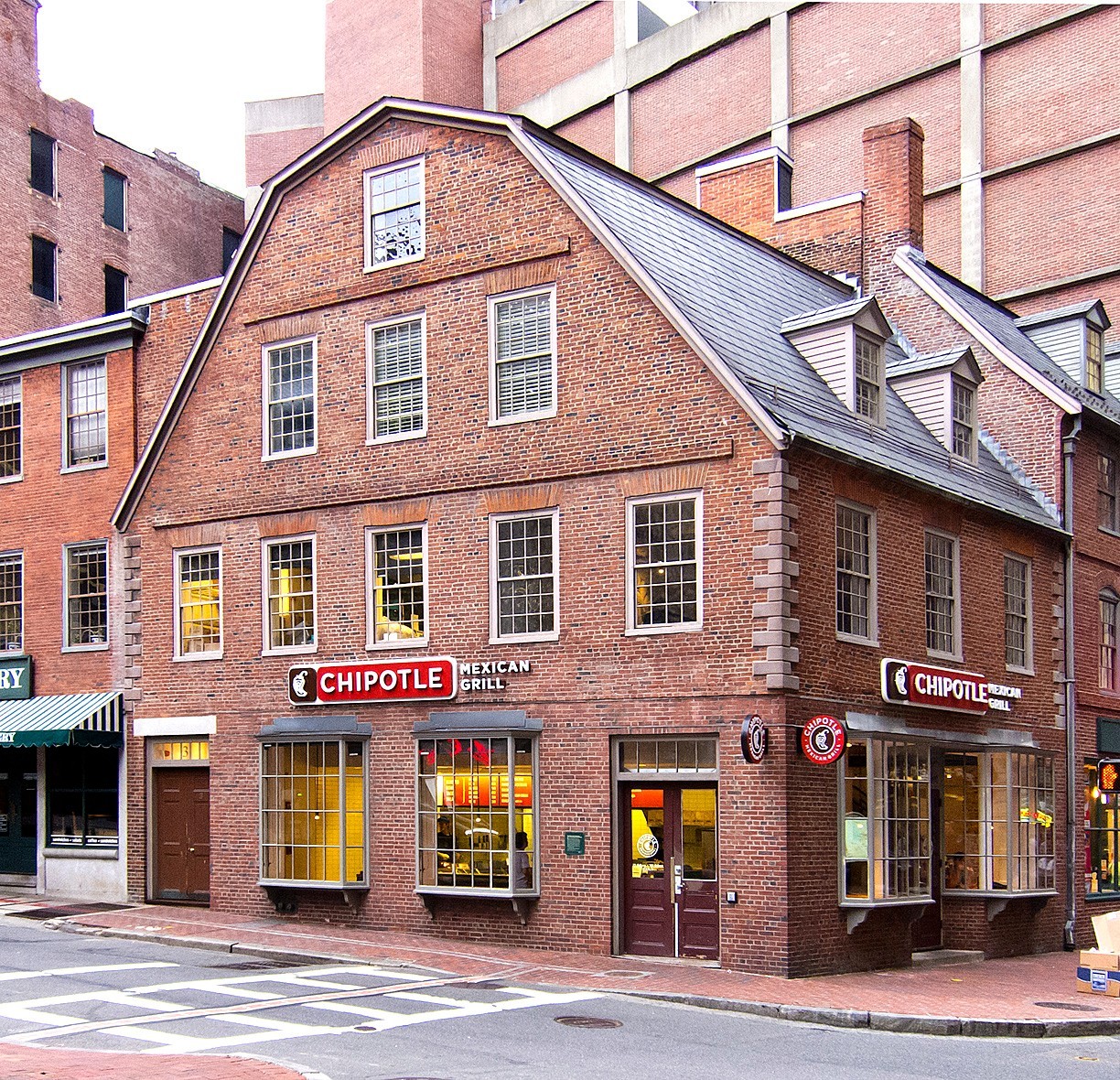
Boston's Old Corner Bookstore is arguably among the most important sites in American literary history. It turns 300 years old in 2018. And, at present, its first floor is operated as a fast-food restaurant.
The Bookstore building is owned by Historic Boston Incorporated (HBI). Recently, HBI was asked to consider converting the Bookstore into a museum of the history of literary Boston. So far, HBI has been unwilling to approve a feasibility study that could produce a practical, long-term plan for this repurposing.
A group of editors, writers and scholars has created a petition to seek support for a change. Pen & Anvil supports this effort, and we're inviting you to show your support as well, by adding your name:
The petition, authored and coordinated by Paul Lewis, President of the Poe Studies Association, is supported as well by the presidents and executive directors of five other literary associations: the American Literature Association, the Ralph Waldo Emerson Society, the Nathaniel Hawthorne Society, the Thoreau Society, and the Ticknor Society. The petition urges HBI to approve the feasibility study as a first step. We ask you to read the petition, and consider adding your name to the list of supporters if you think a museum of Boston's literary heritage should become a program priority for HBI.
Learn more about the Bookstore at Wikipedia, the website of The Freedom Trail, and this 2017 article from The Boston Globe. For more information about the campaign, or to ask how you can be more directly involved, contact Paul Lewis at paul.lewis@bc.edu.
Important: HBI does a lot of good work for our cultural heritage here in Boston. They saved the Bookstore building from demolition in 1960, and have been leasing out the space for commercial use since 2011 to raise money for other preservation work. Saving the structure was heroic, but it’s time now to put the building to a more appropriate use. The best way we can persuade them that the Bookstore conversion is a strong idea is by presenting ourselves as supporters, collaborators, and good neighbors. Find and follow them on Twitter @HistoricBoston.
If you're so inclined, please share the petition with others who might want to sign, by sharing this URL via email or social media: https://www.change.org/p/kathy-kottaridis-convert-the-old-corner-bookstore-into-a-museum-of-boston-s-literary-history.
