Showing posts with label Grolier. Show all posts

Friday, December 27, 2019

Grolier Picks: Books for Winter Reading


From time to time, the staff of America's longest-running poetry-only bookshop, the logically-named Grolier Poetry Book Shop in Harvard Square, release a list of recommended titles from their current stock. Here is their list for the last week of December 2019.


SOME TREES by John Ashbery
Comparing him to T. S. Eliot, Stephanie Burt writes that Ashbery is “the last figure whom half of the English-language poets alive thought a great model, and the other half thought incomprehensible.” After the publication of Some Trees, W. H. Auden famously confessed that he didn't understand a word of it. Most reviews were negative. But in this first book of poems from one of the century's most important poets, one finds the seeds of Ashbery's oeuvre, including the influence of French surrealists—many of whom he translated—and abstract expressionism.


WAKE, SIREN by Nina MacLaughlin
"I am the home of this story. After thousands of years of other people's tellings, of all these different bridges, of words gotten wrong, I'll tell it myself." Seductresses and she-monsters, nymphs and demi-goddesses, populate the famous myths of Ovid's Metamorphoses. But what happens when the story of the chase comes in the voice of the woman fleeing her rape? When the beloved coolly returns the seducer's gaze? When tales of monstrous transfiguration are sung by those transformed? Wake, Siren revisits each account of love, loss, rape, revenge, and change. Drawing on the rhythms of epic poetry and alt rock, of everyday speech and folk song, of fireside whisperings and therapy sessions, author Nina MacLaughlin recovers what is lost when the stories of women are told and translated by men, breathing new life into these fraught and well-loved myths.


MY EMILY DICKINSON by Susan Howe
Susan Howe—taking the poet-scholar-critics Charles Olson, H.D., and William Carlos Williams (among others) as her guides—shows ways in which earlier scholarship has shortened Dickinson's intellectual reach by ignoring the use to which she put her wide reading. Giving close attention to the well-known poem, “My Life had stood—a Loaded Gun,” Howe tracks Dickens, Browning, Emily Brontë, Shakespeare, and Spenser, as well as local Connecticut River Valley histories, Puritan sermons, captivity narratives, and the popular culture of the day.


COLLECTED POEMS of Chinua Achebe
"The father of African literature in the English language and undoubtedly one of the most important writers of the second half of the twentieth century," writes critic Caryl Phillips. Chinua Achebe's award-winning poems are marked by a subtle richness and the political acuity and moral vision that are a signature of all of his work. Focused and powerful, and suffused with wisdom and compassion, Collected Poems is further evidence of this great writer's sublime gifts and it is an essential part of the oeuvre of a giant of world literature.


WOOLGATHERING by Patti Smith
In this small, luminous memoir, the National Book Award-winning author revisits the most sacred experiences of her early years, with truths so vivid they border on the surreal. The author entwines her childhood self—and its "clear, unspeakable joy"—with memories both real and envisioned from her twenties on New York's MacDougal Street.


A THOUSAND MORNINGS by Mary Oliver
In this collection, Mary Oliver returns to the imagery that has come to define her life's work, transporting us to the marshland and coastline of her beloved home, Provincetown, Massachusetts. Whether studying the leaves of a tree or mourning her treasured dog Percy, Oliver is open to the teachings contained in the smallest of moments and explores with startling clarity, humor, and kindness the mysteries of our daily experience.


FELON by Reginald Dwayne Betts
These fierce, dazzling poems tell the story of the effects of incarceration, canvassing a wide range of emotions and experiences through homelessness, underemployment, love, drug abuse, domestic violence, fatherhood, and grace. Betts confronts the funk of post-incarceration existence and examines prison not as a static space, but as a force that enacts pressure throughout a person's life.The poems move between traditional and newfound forms with power and agility—from revolutionary found poems created by redacting court documents to the astonishing crown of sonnets that serves as the volume's radiant conclusion.


THE ODES OF HORACE translated by David Ferry
The Latin poet Horace is, along with his friend Virgil, the most celebrated of the poets of the reign of the Emperor Augustus, and, with Virgil, the most influential. These marvelously constructed poems with their unswerving clarity of vision and their extraordinary range of tone and emotion have deeply affected the poetry of Shakespeare, Ben Jonson, Herbert, Dryden, Marvell, Pope, Samuel Johnson, Wordsworth, Frost, Larkin, Auden, and many others, in English and in other languages. Ferry's inspired new translation of the complete Odes of Horace conveys the wit, ardor and sublimity of the original with a music of all its own.


BLUETS by Maggie Nelson
Since it was first published a decade ago, Bluets has drawn scores of readers with its surprising insights into the emotional depths that make us most human—via two hundred and forty short pieces, by turns lyrical and philosophical, on the color blue. The new beautiful hardcover edition from Wave Books celebrates Nelson's uncompromising vision, inviting longtime fans and newcomers alike to experience and share in an indispensable work that continues to disrupt the literary landscape.


CEREMONIAL ENTRIES by Joe DeRoche
In these tough-minded and tender-hearted poems, DeRoche explores the spiritual and secular frameworks used to assess the competing claims of body, mind, and soul, and of faith and doubt in divinity, love, and poetry itself. The ceremonies lead from struggles between conflicting goods toward acceptance that the world and our experience of it is always sacred and profane: a place where Satan may be a saint and the light in an image of the infant Jesus Christ can seem as earthbound as celestial, where love can redeem and debase, where poetry can transform, disinfect, and merely feint or fail or cheat.


Grolier Poetry Book Shop, at 6 Plympton Street in Cambridge, is open Tuesday and Wednesday from 11-7, and Thursday through Saturday from 11-6. Find them online at Twitter, Facebook, Tumblr and Instagram, or on their website at www.grolierpoetrybookshop.org. The Shop is a historic place for poetry lovers and poetry makers, and they deserve your business. Stop by and buy a book, and let them know that Pen & Anvil sent ya.

Monday, October 31, 2016

Six translation recommendations from the Grolier

Grolier Poetry Book Shop, coming up on its 90th anniversary, is the oldest all-poetry bookshop in America.

The shop has been a home to many great poets, and poetry lovers from all over the world, and remains a destination for poets visiting Boston; one can always be sure to find conversation in its small square space tucked into a side street around the cover from Harvard Yard. Great poets who frequented the shop as readers and patrons include Elizabeth Bishop, Robert Creeley, ee cummings, TS Eliot, Allen Ginsberg, Frank O'Hara, Marianne Moore, Adrienne Rich, Frank Bidart, David Ferry, Michael McClure, Kimiko Hahn, Maxine Kumin, Robert Pinsky, Ariana Riens, and Franz Wright.

The latest selection of staff-recommended titles in translation appear below. Beyond the intrinsic value of the literature on offer, keep in mind that purchases made directly to a bricks-and-mortar shop not only help to show support for literary culture, but provide direct support to an institution that has hosted innumerable in-person encounters among writers, readers, and literature-lovers over the years.

Click here to learn more about supporting this irreplaceanble institution via direct giving to the Grolier Legacy Fund. Or, sign up here to receive their email updates directly.
Buy this title
Buy this title

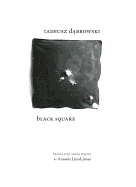
Black Square by Tadeusz Dabrowski

Translated from Polish by Antonia Lloyd-Jones. $15. Tadeusz Dabrowski was born in northern Poland in 1979. From his first volume, published in 1999, he has been critically acclaimed for poetry that combines a tone of metaphysical meditation with the theme of love. His poems are like snapshots taken by a sensitive camera that captures moments filled with the "caring absence" of God and intimacy with the woman the poet loves. Here we find gravity laced with humor and sublimity mixed with pleasure. So far Dabrowski has published five volumes of poetry in his native Poland, which have won him numerous awards. His work has appeared in translation in thirteen European languages. English translations of his poems by Antonia Lloyd-Jones have been published in leading literary journals including Agni, American Poetry Review, and Tin House. Black Square is his first collection to be published in English.

Antonia Lloyd-Jones is a translator of Polish literature. In 2008 she won the Found in Translation Award for her translation of The Last Supper, a novel by Pawel Huelle. Her other translations of fiction include works by Jaroslaw Iwaszkiewicz and Olga Tokarczuk. Her translations of poetry by Jacek Dehnel appeared in a recent anthology, Six Polish Poets, published by Arc Publications.
Buy this title
Buy this title

Black Stars by Ngo Tu Lap

Translated from Vietnamese by Martha Collins. $16. "A beautifully rendered translation by Vietnamese poet Ngo Tu Lap and acclaimed American poet Martha Collins, Black Stars introduces a man who is both attached to his war-haunted childhood home and deeply conversant with contemporary global life.

Simultaneously occupying past, present, and future, Black Stars escapes the confines of time and space, suffusing image with memory, abstraction with meaning, and darkness with abundant light. In these masterful translations -- printed alongside the original Vietnamese -- the poems sing out with the kind of wisdom that comes to those who have lived through war, traveled far, and seen a great deal. While the past may evoke village life and the present a postmodern urban world, the poems often exhibit a dual consciousness that allows the poet to reside in both at once. From the universe to the self, we see Lap's landscapes grow wider before they focus: black stars receding to dark stairways, infinity giving way to now. Lap's universe is boundless, yes, but also
just big enough
to have four directions
with just enough wind, rain, and trouble to last
Buy this title
Buy this title

Fusion Kitsch by Hsia Yu

Translated from Chinese by Steve Bradbury. $13. Steve Bradbury writes: "Hsia Yü's frank and innovative treatment of gender and sexuality in a small handful of poems in this collection and in her second collection Ventriloquy (Fuyushu) was seized upon by critics and scholars anxious to find a candidate to fill the long-vacant post of "Chinese feminist poet." But while Hsia Yü may well have been one of the first woman poets writing in Chinese to have written about love and romance in a manner that broke dramatically from the conventions and constraints of traditional Chinese women's poetry, if we bother to look beyond labels at the poetry itself, we will find a body of work that is far less interested in providing a critique of gender relations or advancing a sexual/textual agenda than in exploring the sensuous and quirky interface between the pleasures of the flesh and the pleasures of the text. It is this preoccupation with pleasure that sets Hsia Yü apart from other poets writing in Chinese today; that and the fact that her poetry embodies a fusion of styles and influences -- both high and kitsch -- with the French influence running perhaps stronger than most."

Among her numerous honors, Hsia Yü was most recently awarded the Taipei City Literature Award for her book Salsa.
Buy this title
Buy this title

Door Languages by Zafer Senocak

Translated from German by Elizabeth Oehklers Wright. $16.95. Lee Upton, author of Undid in the Land of Undone, writes: "Door Languages, in Elizabeth Oehlkers Wright's brilliant translation, sends us news of the stranger within us who keeps putting on and taking off a cloak of invisibility. This is bracing work. Line by insinuating line, Zafer Senocak peels back our most rigid assumptions. These poems, marked by the highest ambition, read like folk tales from the future." 

Askold Melnyczuk, founder of Agni: "A fine edgy satisfyingly demystifying voice."
Buy this title
Buy this title

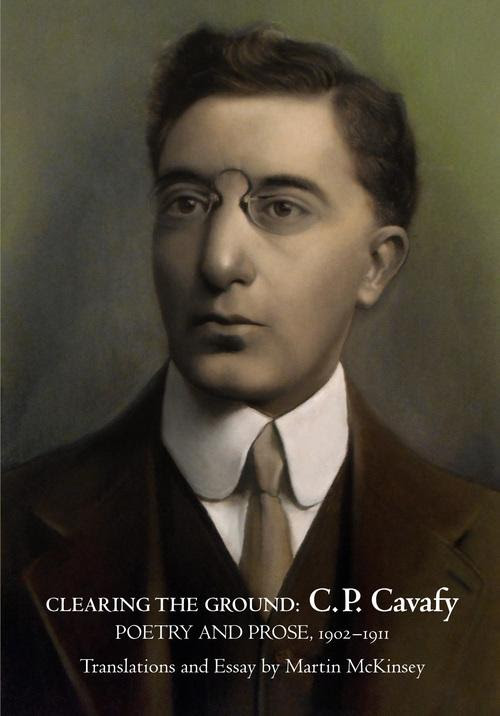
Clearing The Ground by C.P. Cavafy

Translated from Greek by Martin McKinsey. $17. "Clearing the Ground conveys the texture of Cavafy's written life through the course of a near decade -- the threads of preoccupation, the unfolding elucidations, the occurrence of the poems in their shining clarity. What appears is an active and intimate image of Cavafy, the poet and the man."
I know that I am cowardly, and am unable to act. Therefore I confine myself to words. But I don't think that my words are without purpose. Someone else will act. But my many words -- the words of a coward -- will make it easier for that person to act. My words clear the ground.
~ Cavafy, 1902
Buy this title
Buy this title

Darkness Spoken by Ingeborg Bachmann

Translated from German by Peter Filkins. $24.95. Ingeborg Bachmann was born in 1926 in Klagenfurt, Austria. She studied philosophy at the universities of Innsbruck, Graz, and Vienna, where she wrote her dissertation on the philosophy of Martin Heidegger. In 1953 she received the poetry prize from Gruppe 47 for her first volume, Borrowed Time (Die gestundete Zeit), after which there followed her second collection, Invocation of the Great Bear (Anrufung des großen Bären), in 1956. Bachmann also went on to write short stories, essays, opera libretti, and novels, including The Thirtieth Year, Malina, and The Book of Franza. At the time of her death in a fire in Rome in 1973, Bachmann was at work on a cycle of novels titled Todesarten (Ways of Dying), of which Malina was the first published volume.

Along with her close friend Paul Celan, Bachmann was considered the premiere German language poet of her generation. Her various awards include the Georg Büchner Prize, the Berlin Critics Prize, the Bremen Award, and the Austrian State Prize for literature. Her work remains highly influential to this day, and she is now regarded as a pioneer of European feminism and postwar literature. Influencing numerous writers from Thomas Bernhard to Christa Wolf, Bachmann's poetic investigation into the nature and limits of language in the face of history remains unmatched in its ability to combine philosophical insight with haunting lyricism.

Peter Filkins has published two volumes of poetry, What She Knew (1998) and After Homer (2002), and has translated Bachmann's The Book of Franza and Requiem for Fanny Goldmann. He is the recipient of an Outstanding Translation Award from the American Literary Translators Association and the Berlin Prize from the American Academy in Berlin. He teaches at Simon's Rock College of Bard in Great Barrington, Massachusetts.

Monday, May 30, 2016

Mazer on Mazer

"The tension is the meaning of the poet/poem versus the meaning of the world." 

This  comment by Ben Mazer about the vibrating tension at the heart of his work, comes from his 2014 reading at Grolier Poetry Book Shop in Cambridge, Massachusetts, in reply to an audience question: "Can you explain for us please .the "mystery" of the "tension" which vibrates in your poetry?" (As reported at the Scarriet blog.)

//-- > Mazer's December Poems, published by Pen & Anvil in May 2016, is available for sale via the press website or Amazon.com.